
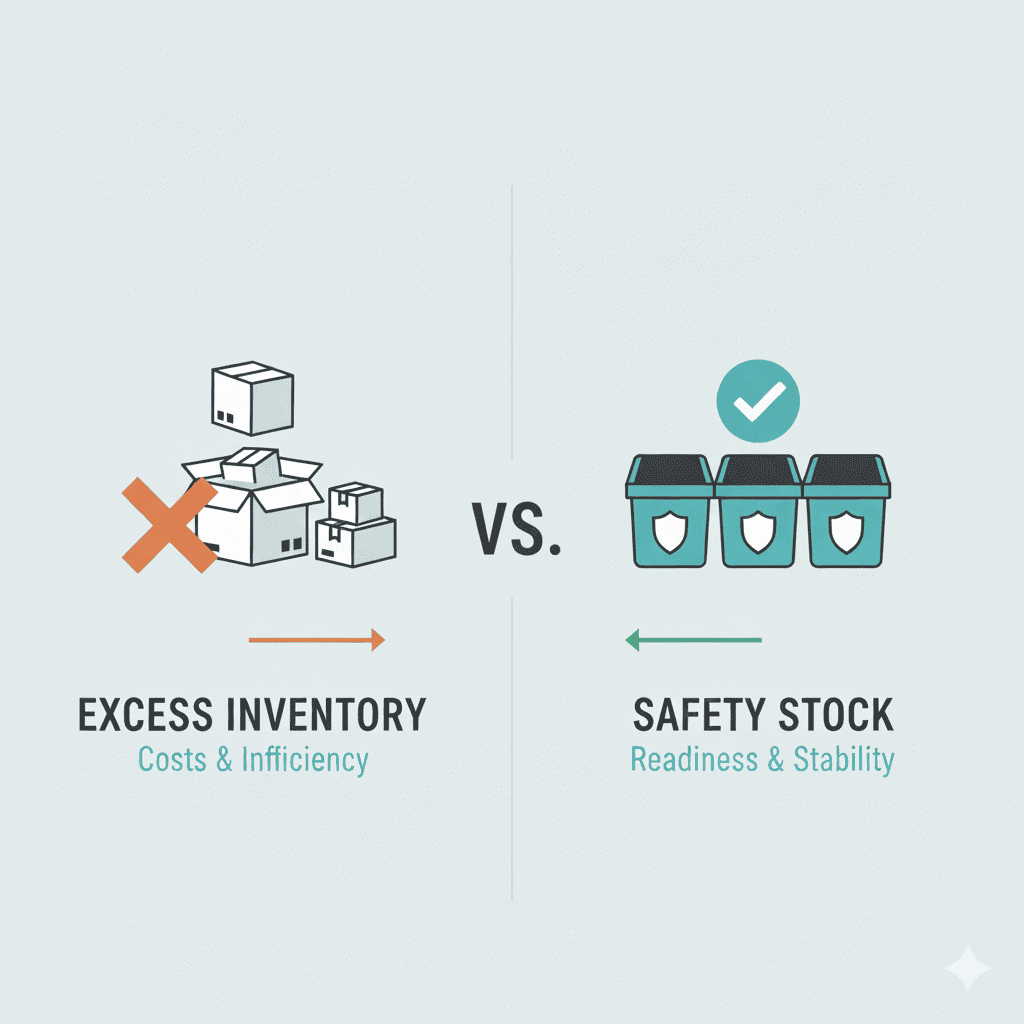
In the realm of inventory management, distinguishing between excess inventory and safety stock is paramount. While both pertain to the quantity of goods held in stock, their purposes and implications differ significantly. Understanding these differences can help businesses make informed decisions that balance customer satisfaction with cost efficiency.
What Is Excess Inventory?
Excess inventory refers to the surplus stock that exceeds the actual demand for a product. This situation often arises from overestimating customer demand, inaccurate forecasting, or poor inventory management practices. Unlike safety stock, which is intentionally maintained as a buffer against uncertainties, excess inventory is typically an unintended accumulation.
Consequences of Excess Inventory
- Increased Holding Costs: Storing surplus inventory incurs additional expenses such as warehousing, insurance, and maintenance.
- Reduced Cash Flow: Capital tied up in unsold goods limits the funds available for other business activities.
- Risk of Obsolescence: Products may become outdated or obsolete, leading to potential write-offs.
- Decreased Profit Margins: To clear excess stock, businesses might resort to heavy discounts, impacting profitability.
What Is Safety Stock?
Safety stock is the additional inventory kept on hand to mitigate the risk of stockouts caused by uncertainties in demand or supply. It acts as a buffer to ensure that businesses can continue operations smoothly during unforeseen circumstances, such as sudden increases in demand or supply chain delays.
Importance of Safety Stock
- Prevents Stockouts: Ensures product availability during unexpected demand spikes or supply disruptions.
- Maintains Customer Satisfaction: Reduces the likelihood of disappointing customers due to unavailable products.
- Supports Operational Continuity: Allows businesses to operate without interruptions, even during unforeseen events.
Key Differences Between Excess Inventory and Safety Stock
| Aspect | Excess Inventory | Safety Stock |
|---|---|---|
| Purpose | Unintended surplus beyond demand | Intended buffer against demand/supply uncertainty |
| Cause | Overordering, inaccurate forecasting | Variability in demand or supply |
| Financial Impact | Increases holding costs, ties up capital | Optimizes stock levels, reduces stockouts |
| Risk | Potential obsolescence, reduced margins | Mitigates risk of stockouts |
| Management | Requires reduction strategies | Requires regular monitoring and adjustment |
Best Practices for Managing Inventory
- Accurate Demand Forecasting: Utilize historical data and market trends to predict customer demand accurately.
- Regular Inventory Audits: Conduct periodic reviews to identify and address excess inventory promptly.
- Implement Inventory Management Software: Leverage technology to track inventory levels and automate reorder processes.
- Establish Clear Reorder Points: Determine optimal stock levels and reorder points to maintain a balance between excess inventory and stockouts.
- Supplier Collaboration: Work closely with suppliers to ensure timely deliveries and flexibility in order quantities.
Conclusion
While both excess inventory and safety stock involve holding additional goods, their roles in inventory management are distinct. Excess inventory often results from inefficiencies and can negatively impact a business’s financial health, whereas safety stock is a strategic measure to ensure operational continuity and customer satisfaction. By understanding and managing these inventory types effectively, businesses can optimize their operations and maintain a healthy bottom line.
For businesses looking to optimize their inventory management practices, consider implementing advanced forecasting tools and inventory management systems. These technologies can provide real-time insights, helping to maintain the right balance between excess inventory and safety stock, ultimately leading to improved operational efficiency and customer satisfaction.
If you’re seeking assistance in liquidating surplus inventory, Liquidate Products offers fast and efficient liquidation services to help businesses recover value from excess stock.