
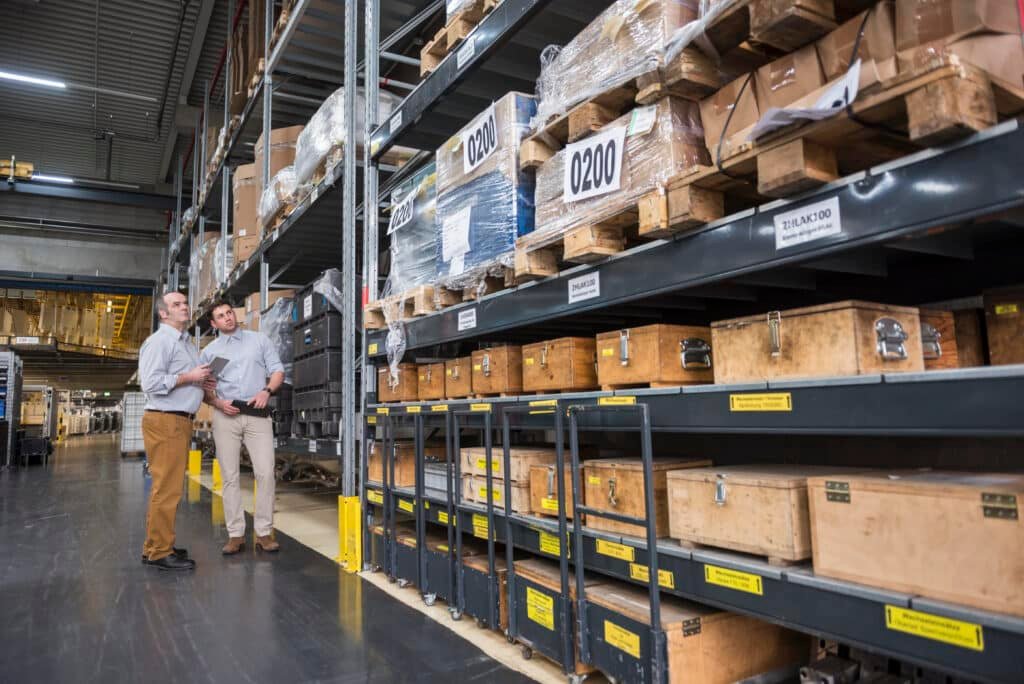
Selling excess inventory from a 3PL or fulfilment centre requires more coordination than clearing stock from a company-owned warehouse. The seller may own the goods, but the logistics provider controls physical access, pallet preparation, appointment times and release procedures. A liquidation buyer must therefore evaluate both the products and the practical requirements for removing them.
The process becomes much easier when the seller involves the 3PL early, prepares accurate inventory data and confirms all warehouse charges before accepting an offer. This guide explains how to sell excess inventory from a 3PL warehouse while reducing delays, unexpected fees and pickup problems.
What Is 3PL Inventory Liquidation?
Third-party logistics inventory liquidation is the bulk sale and removal of excess, overstock, discontinued or otherwise unwanted merchandise stored at an external warehouse or fulfilment facility.
The seller remains the owner of the merchandise, but the facility may be responsible for:
- Receiving and storing the products
- Tracking quantities and warehouse locations
- Picking, packing and shipping orders
- Processing returns
- Preparing pallets or cartons for outbound freight
- Scheduling carrier appointments
- Producing warehouse and billing reports
When the seller agrees to sell the stock to an excess inventory buyer, the 3PL normally needs formal instructions before it can release the goods. The facility may also charge for palletisation, wrapping, labelling, counting, loading or urgent outbound work.
The transaction involves three operational parties: the inventory owner, the liquidation buyer and the 3PL. Each party must know what it is responsible for before pickup.
Why Excess Stock at a 3PL Can Become Expensive
Inventory stored at an external facility can create several costs even when it is not generating sales.
Recurring storage fees
Most 3PL agreements charge according to pallet positions, bins, cubic space or another storage unit. Slow-moving products continue using capacity while their commercial value may decline.
Long-term or aged-inventory charges
Some fulfilment providers apply higher fees after stock has remained in storage for a specified period. Review the contract and recent invoices to identify whether older units are attracting additional charges.
Handling and account costs
Monthly minimums, account fees, cycle counts, inventory adjustments and other services may continue even when order volume has fallen.
Disposal and removal pressure
If the seller closes an account or misses payments, the facility may impose deadlines or other remedies allowed under the service agreement. Waiting until the final release date reduces the time available to evaluate offers and arrange freight.
Reduced operational visibility
Businesses sometimes focus on inventory stored in their own buildings and overlook ageing stock held by an external provider. The products remain on reports but may not receive regular commercial review.
Liquidation should be considered before fees and deadlines force a rushed decision. Start by identifying inventory that is unlikely to justify continued storage.
Step 1: Review Your 3PL Agreement
Before offering the inventory for sale, review the current warehousing and fulfilment agreement. The contract determines what the facility can charge and how goods may be released.
Look for provisions related to:
- Storage and minimum monthly charges
- Long-term storage fees
- Account closure requirements
- Outbound handling charges
- Pallet building and stretch-wrapping fees
- Labelling and documentation charges
- Carrier appointment requirements
- Loading fees
- Rush-order surcharges
- Inventory-count or audit fees
- Notice periods
- Unpaid balances or warehouse liens
- Required insurance or carrier documentation
Do not assume that a buyer’s arranged pickup eliminates all 3PL costs. The warehouse may still bill the seller for labour, pallet materials, account closure or special preparation.
Ask the facility for a written estimate of the charges required to release the proposed lot. This amount should be considered when comparing the net value of a liquidation offer.
Step 2: Confirm That the Inventory Can Be Released
The seller should confirm that it has authority to sell the goods and that the 3PL is permitted to release them.
Resolve questions such as:
- Is the inventory fully owned by the seller?
- Is any portion held on consignment?
- Are supplier approvals required?
- Are there unpaid warehouse charges affecting release?
- Does the 3PL require a formal release order?
- Who is authorised to instruct the facility?
- Are any units allocated to outstanding customer orders?
- Is part of the inventory quarantined, recalled or restricted?
If the warehouse will not release the inventory until an account balance is paid, identify that issue before negotiating a pickup date. The buyer should not arrive at a facility only to learn that the goods are unavailable.
Step 3: Obtain a Current Warehouse Inventory Report
Request a current report directly from the 3PL. Do not rely solely on an old spreadsheet or ecommerce-platform count, because recent orders, returns, damage and adjustments may have changed the available quantity.
A useful report should include:
- SKU
- UPC, EAN or GTIN
- Product description
- Quantity on hand
- Quantity available
- Quantity allocated to orders
- Quantity on hold or quarantined
- Case pack
- Lot or batch number when relevant
- Expiration or best-by date when relevant
- Condition status
- Warehouse location
- Number of cartons, cases or pallets
The Global Trade Item Number helps identify trade items consistently across supply-chain systems. Use the official GS1 GTIN guidance when validating product identifiers.
Ask the 3PL when the report was generated and whether it represents a live quantity or a previous day’s snapshot. If customer orders are still being fulfilled, request a temporary allocation or hold once the sale reaches the appropriate stage.
Step 4: Reconcile Your Records With the 3PL
Compare the warehouse report with your inventory-management, accounting and sales systems. Differences may result from pending returns, damaged units, unprocessed receipts, order allocations or inaccurate conversions between individual units and cases.
Investigate material discrepancies before sending the manifest to buyers. Confirm:
- Whether quantities are listed as units, inner packs or cases
- Whether damaged inventory is included
- Whether inbound shipments have been received
- Whether outbound orders have been deducted
- Whether returns have been inspected
- Whether product bundles are recorded as individual components
- Whether old SKU numbers map to current identifiers
The goal is not merely to create a large total. It is to provide a quantity that can be released and collected. If the final count is estimated, label it clearly and agree on how quantity differences will be handled.
Step 5: Separate Saleable, Restricted and Non-Saleable Stock
An inventory report may combine stock that has different conditions or legal statuses. Before offering the lot, divide it into practical categories.
These may include:
- New and factory sealed
- New with damaged packaging
- Shelf pulls
- Customer returns
- Open-box goods
- Refurbished products
- Incomplete or damaged units
- Expired items
- Recalled or quarantined goods
- Products requiring special disposal
Do not include recalled products in a normal resale lot. Businesses can review the U.S. Consumer Product Safety Commission recall database for relevant notices. Product-specific compliance requirements may also apply to food, cosmetics, medical products, batteries and other regulated categories.
If the 3PL uses disposition codes, ask for the definition of each code. A warehouse label such as “damaged” may refer to a crushed outer carton rather than a defective product, but the buyer needs the actual meaning.
Step 6: Build a Buyer-Friendly Liquidation Manifest
The warehouse report may contain internal fields that are not useful to an outside buyer. Convert the relevant information into a clean liquidation manifest.
Use one row per SKU and condition. Include:
- SKU and product identifier
- Brand and product name
- Model, colour, size or variant
- Available quantity
- Condition
- Case pack
- Original wholesale price or MSRP, if useful
- Lot, batch or date information
- Product dimensions and weight
- Warehouse location
- Pallet or carton quantity
- Relevant restrictions or notes
Make sure formulas are correct and duplicate rows are removed. Separate inventory located at different facilities, even when the same SKU appears in both places.
For a detailed preparation process, use the site’s guide on how to prepare an excess inventory manifest.
Step 7: Request Representative Photographs
The seller may not be physically present at the fulfilment centre, but the buyer still needs current images of the actual inventory. Ask the 3PL whether warehouse photographs are included in the service or billed separately.
Request images showing:
- Full pallets or storage locations
- Representative cartons
- Product labels and model numbers
- UPC or GTIN labels
- Date or batch codes
- Inner and outer packaging
- Typical packaging damage
- Pallet labels
- Any visible product damage
If the lot contains multiple conditions, ask for examples from each group. Catalogue images can support identification, but they should not replace warehouse photographs.
Name the files by SKU or pallet number so a buyer can match the images to the manifest. For a large mixed lot, photograph more than one pallet to provide a representative view.
Step 8: Calculate the True Cost of Removal
The purchase offer is only one part of the financial outcome. A 3PL may charge several fees before the stock leaves the building.
Ask for estimates covering:
- Pick-and-pack or case-picking fees
- Palletisation
- Pallet materials
- Stretch wrap
- Labelling
- Inventory counting
- Loading
- Administrative processing
- Rush service
- Account closure
- Disposal of excluded items
- Storage through the expected pickup date
Calculate net recovery using the purchase amount minus all seller-paid expenses. Also consider whether storage fees will continue if pickup is delayed.
A buyer that takes the entire suitable lot may deliver a better net outcome than a higher-priced proposal that requires the 3PL to select small quantities from hundreds of locations.
Step 9: Decide Whether the Lot Will Ship as Units, Cases or Pallets
The current warehouse configuration affects labour and freight. Inventory already stored on uniform pallets may be easier to remove than thousands of loose units held in pick bins.
Ask the 3PL:
- Is the merchandise already palletised?
- Are mixed-SKU pallets permitted?
- Can the facility build pallets by SKU or condition?
- What pallet dimensions and height limits apply?
- Will the facility provide accurate weights?
- Can cartons be shipped as floor-loaded freight?
- Does the facility allow buyer inspection?
- How much notice is required for preparation?
Share this information with the buyer before finalising terms. If extensive repacking is required, decide who pays and how much time it will add.
Step 10: Establish a Single Point of Contact
Transactions can slow down when the seller, buyer and warehouse exchange separate instructions. Designate one authorised contact at each organisation.
The seller’s contact should coordinate:
- Final approval of the inventory list
- Release instructions
- Warehouse charges
- Pickup timing
- Changes to quantity
- Payment confirmation
- Required documents
The 3PL should know that the buyer or carrier may ask operational questions, but ownership or release changes should still come from the authorised seller representative.
Keep important decisions in writing. A short email summarising agreed quantities, responsibilities and dates can prevent conflicting instructions.
Step 11: Submit the Inventory to a Direct Buyer
Once the report, manifest, images and warehouse details are ready, send a concise opportunity summary to an excess inventory buyer.
Include:
- Product categories
- Total available units
- Condition breakdown
- Facility city and state
- Number of pallets or cartons
- Whether the stock is already palletised
- Any dates or compliance information
- Desired removal deadline
- Known warehouse preparation charges
- Whether the entire lot must be purchased
- Applicable resale restrictions
Excess Inventory Buyer works with manufacturers, wholesalers, retailers, distributors, importers and Amazon FBA sellers holding surplus merchandise. Review the inventory categories and buying process before using the Submit Your Inventory form.
Upload the manifest and representative photographs when possible. Complete information helps the buyer evaluate both the merchandise and the logistics.
Step 12: Compare Offers Based on the Complete Transaction
Compare more than the headline price. Review each buyer’s proposed terms, timeline and responsibilities.
Important points include:
- Total purchase amount
- Inventory included and excluded
- Payment timing and method
- Inspection rights
- Responsibility for 3PL preparation fees
- Freight responsibility
- Carrier requirements
- Pickup deadline
- Treatment of count differences
- Treatment of damaged goods
- Resale-channel restrictions
- Documentation required after pickup
If one buyer wants only the strongest SKUs, calculate what it will cost to continue storing or disposing of the remaining products. A full-lot solution may be more valuable even when the per-unit price is lower.
Do not give multiple buyers conflicting commitments to the same units. Once an agreement is executed, ask the 3PL to place the approved inventory on hold so it is not allocated to new orders.
Step 13: Coordinate Freight and Verify the Carrier
The buyer, seller or 3PL may arrange transportation depending on the agreement. Confirm the responsibility in writing.
The facility may require:
- Carrier name
- Pickup or confirmation number
- Bill of lading
- Appointment date and time
- Trailer type
- Driver identification
- Insurance certificate
- Number of pallets
- Total weight
- Special equipment
For interstate commercial carriers in the United States, businesses can use the Federal Motor Carrier Safety Administration’s SAFER Company Snapshot to review publicly available carrier identification and safety information.
Send the carrier the correct facility address, entrance instructions, dock hours and reference numbers. Confirm whether the driver must count pallets or sign for a sealed load.
Step 14: Issue Clear Release Instructions
The 3PL should receive written authorisation that identifies the exact inventory and the party permitted to collect it.
The release should normally specify:
- Seller or account name
- Buyer name
- Carrier name when available
- SKUs and quantities
- Pallet or order numbers
- Pickup reference
- Approved pickup window
- Required documents
- Person authorised to approve changes
Do not use a vague instruction such as “release our old inventory.” The warehouse needs a list it can match to its system and physical locations.
If the final quantity will be determined during preparation, agree on the reconciliation process. The buyer and seller should understand whether payment changes according to the verified unit count.
Step 15: Confirm Payment and Final Records
Complete the agreed payment process before or according to the release terms. The seller, buyer and 3PL should not make assumptions about when ownership changes.
Retain:
- Purchase agreement
- Final manifest
- Invoice and payment record
- Warehouse release order
- Bill of lading
- Pickup confirmation
- Pallet photographs
- Inventory adjustment report
- Documentation for excluded or disposed goods
After pickup, reconcile the 3PL’s closing inventory report with the final manifest. Resolve unexpected balances promptly so storage fees do not continue on small residual quantities.
Common Mistakes to Avoid
Contacting buyers before speaking with the 3PL
The facility may require time, fees or documentation that changes the transaction. Confirm warehouse requirements early.
Using an outdated inventory count
Live fulfilment activity can change quantities daily. Request a current report and place the approved stock on hold at the right stage.
Ignoring warehouse preparation charges
Pallet building, labelling and loading may reduce net recovery. Obtain a written estimate before comparing offers.
Mixing available and allocated units
Products assigned to customer orders may not be available for liquidation. Show only releasable quantities.
Providing no warehouse photographs
A system report does not prove packaging condition. Representative images help a buyer understand the actual lot.
Waiting until account closure
An urgent deadline leaves less time to reconcile counts, negotiate fees, evaluate buyers and schedule freight.
Leaving a small residual balance
After pickup, verify that all approved units were removed or assigned a clear disposition. A few leftover cartons can keep the account open and continue generating fees.
A Simple 3PL Liquidation Checklist
Before requesting an offer, confirm that you have:
- Reviewed the 3PL agreement
- Confirmed release authority
- Requested a current inventory report
- Reconciled available quantities
- Separated restricted and non-saleable goods
- Built a clean liquidation manifest
- Collected current photographs
- Estimated warehouse preparation fees
- Confirmed pallet and freight details
- Defined the desired removal date
- Identified acceptable resale channels
- Chosen authorised contacts
Before pickup, confirm that you have:
- Approved the final inventory list
- Placed the stock on hold
- Completed payment requirements
- Issued the release order
- Scheduled the carrier appointment
- Supplied facility reference numbers
- Retained final records
- Requested a closing inventory report
Turn 3PL Overstock Into an Organised Exit
Excess inventory stored at a third-party warehouse does not need to become a permanent monthly expense. The key is to manage the sale as both an inventory transaction and a logistics project.
Start with the 3PL agreement, obtain current quantities, separate unsuitable goods and calculate the facility’s removal charges. Then give the buyer a reliable manifest, representative photographs and clear information about the warehouse configuration.
With responsibilities defined in advance, the seller, buyer and fulfilment centre can coordinate payment, release and freight without unnecessary confusion.
If your business has excess, overstock, discontinued or slow-moving merchandise stored at a 3PL or fulfilment centre, submit your inventory for review. Include the product list, condition, quantity, warehouse location, photographs and desired removal timeline.
Frequently Asked Questions
Can I sell inventory stored at a 3PL warehouse?
Generally, the inventory owner can sell its goods, subject to the 3PL agreement, outstanding charges, allocation status and any supplier or product restrictions. Confirm the facility’s release requirements before completing the sale.
Does the 3PL need to approve the buyer?
The facility may not approve the commercial buyer, but it normally must approve access, carrier appointments and release documentation. Some warehouses also require insurance or identification from carriers and visitors.
Who pays the warehouse handling fees?
That depends on the sale agreement. The seller often remains responsible for charges billed under its 3PL contract, while the buyer may arrange freight. State each responsibility clearly before accepting the offer.
What inventory information does a buyer need?
Provide SKUs, product identifiers, descriptions, quantities, condition, case packs, relevant dates, pallet details, warehouse location and current photographs. Disclose whether the stock is loose, cased or already palletised.
Can a buyer collect inventory from multiple fulfilment centres?
It may be possible, but each location should have a separate inventory list, fee estimate and pickup plan. The buyer needs accurate quantities and freight details for every facility.
What if the 3PL count differs from my records?
Reconcile the difference before finalising the sale. Review allocated orders, returns, damage, recent receipts and unit-of-measure conversions. Agree with the buyer on how final quantity adjustments will affect payment.
How can I stop storage charges after the sale?
Arrange prompt pickup, confirm that all approved inventory left the facility and request a closing report. Dispose of or transfer any excluded balance according to a documented plan. Review the contract for account-closure and notice requirements.
Should I close the fulfilment account before selling the inventory?
Usually, it is better to understand the liquidation and removal plan first. Closing too early may create a short deadline or additional charges. Coordinate the sale, release and account closure according to the contract.