
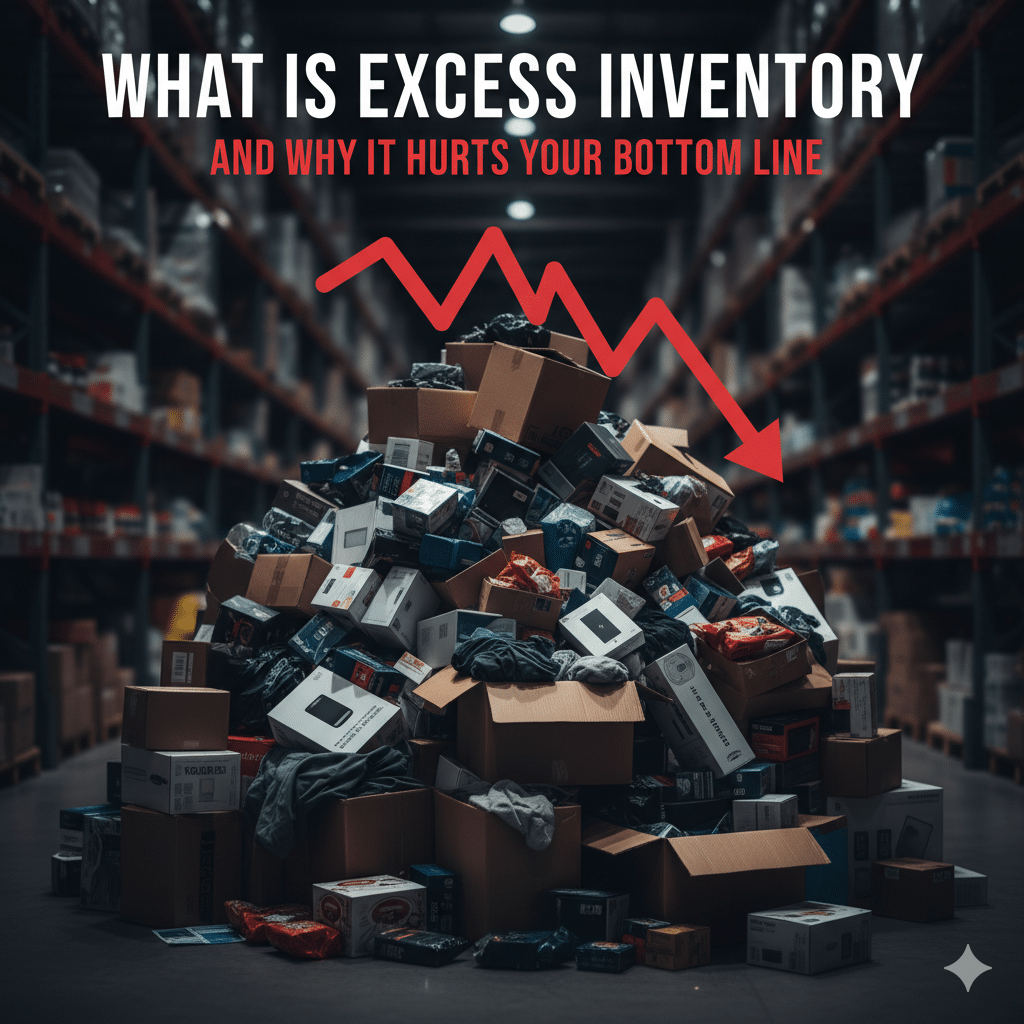
Excess inventory, when you have more stock than customer demand, can significantly impact your business’s profitability. While it might seem prudent to have extra stock on hand, especially during peak seasons, holding too much inventory can lead to significant financial strain. This blog delves into what excess inventory is, its root causes, and how it can adversely affect your bottom line.
What Is Excess Inventory?
Excess inventory refers to the quantity of goods held by a business that surpasses the demand or sales velocity for those items. This surplus can result from overordering, overproduction, or inaccurate demand forecasting. If not managed properly, excess inventory can become obsolete or unsellable, leading to financial losses.
Causes of Excess Inventory
- Overproduction: Manufacturing more products than needed, often due to optimistic sales forecasts or production inefficiencies.
- Poor Demand Forecasting: Relying on outdated data or inaccurate models can lead to misjudging customer demand, resulting in overstocking.
- Supply Chain Disruptions: Delays or uncertainties in the supply chain can prompt businesses to order additional stock as a buffer, leading to excess inventory.
- Inefficient Inventory Management: Lack of real-time tracking and poor inventory control practices can cause discrepancies between actual stock levels and recorded figures.
- Seasonal Demand Fluctuations: Misjudging the duration or intensity of seasonal demand can result in holding unsold stock after peak periods.
Impact on Cash Flow
Excess inventory ties up capital that could be utilized elsewhere in the business. Funds spent on unsold goods cannot be reinvested in growth opportunities, marketing, or other operational needs. This strain on cash flow can hinder a company’s ability to pay bills, invest in new projects, or respond to market changes promptly.
Storage Costs and Other Financial Implications
Holding excess inventory incurs various costs, including:
- Warehousing Fees: Rent, utilities, and maintenance of storage facilities.
- Insurance: Protecting goods from damage, theft, or loss.
- Labor Costs: Expenses related to handling, stocking, and managing inventory.
- Opportunity Costs: The potential returns from alternative investments or uses of capital.
These combined expenses can account for 20–30% of the inventory’s value annually, significantly eroding profit margins.
Risks of Obsolescence
Products, especially in industries like technology or fashion, have a limited shelf life. Excess inventory increases the risk of goods becoming obsolete or outdated, leading to markdowns, write-offs, or even disposal. This not only results in direct financial losses but can also damage brand reputation and customer trust.
Strategies to Mitigate Excess Inventory
- Implement Just-In-Time (JIT) Inventory Systems: Align production and ordering closely with actual demand to minimize surplus.
- Enhance Demand Forecasting: Utilize advanced analytics and real-time data to predict customer needs more accurately.
- Regular Inventory Audits: Conduct frequent checks to ensure stock levels align with sales trends and market conditions.
- Diversify Sales Channels: Expand distribution through various platforms to reach a broader customer base and reduce unsold stock.
- Develop Exit Strategies for Slow-Moving Goods: Implement promotions, discounts, or bundle offers to move excess inventory before it becomes obsolete.
Conclusion
While having a buffer stock can be beneficial, excessive inventory can strain financial resources and hinder business agility. By understanding the causes and impacts of excess inventory and implementing proactive management strategies, businesses can maintain optimal stock levels, ensuring healthy cash flow and profitability.
If you’re struggling with excess inventory and its associated challenges, companies like LiquidateProducts and excess inventory buyer has solutions to help you liquidate surplus stock efficiently. Contact us today to learn how we can assist in turning your excess inventory into cash.